
Hazen Research

  • HOME
  • ABOUT
    • MAP & DIRECTIONS
  • VALUES
  • CAPABILITIES
    • ANALYTICAL SERVICES
      • Water, Wastewater
      • Radiochemistry
      • Geologic Materials, Mill Processes
      • Precious Metals, Fire Assaying
      • Coal, Biomass
      • Sample Preparation
      • Quality Control
    • PROCESS MINERALOGY
      • Optical Microscopy
      • Electron Microscopy
      • X-Ray Diffraction Analysis
    • MINERALS BENEFICIATION
      • Gravity Separation
      • Froth Flotation
      • Magnetic Separation
      • Other Beneficiation Methods
    • HYDROMETALLURGY
      • Leaching
        • High Pressure Leaching
      • Solid-Liquid Separation
      • Precipitation
      • Solvent Extraction
      • Adsorption and Ion Exchange
      • Electrochemistry
      • Crystallization
      • Pilot Plants
    • THERMAL PROCESSING
      • Drying, Calcination, Combustion, and Roasting Processes
      • Pyrometallurgy
      • Materials Processing
      • Process Development
      • Waste Treatment and Recycling
      • Analytical Capabilities
      • Equipment
    • ENVIRONMENTAL SERVICES
      • Waste Characterization
      • Hazardous Waste Treatability Studies
      • Quality Assurance and Quality Control
      • Health and Safety
      • Waste Characterization for Remediation Processes
      • Soil Washing Studies
    • ENERGY AND FUEL SERVICES
      • Fuels Characterization
      • Laboratory And Pilot Plant Services
      • Field Services
    • COMMINUTION
    • PILOT PLANT AND OTHER SERVICES
      • Pilot Plants
      • Engineering Services
      • Feasibility Studies
      • Field Services
  • CONTACT
  • JOBS
  • SITE MAP
  • ANALYTICAL SERVICES
  • PROCESS MINERALOGY
    • Optical Microscopy
    • Electron Microscopy
    • X-Ray Diffraction Analysis
  • MINERALS BENEFICIATION
  • HYDROMETALLURGY
  • THERMAL PROCESSING
  • ENVIRONMENTAL SERVICES
  • ENERGY AND FUEL SERVICES
  • COMMINUTION
  • PILOT PLANT AND OTHER SERVICES

HOME : CAPABILITIES : PROCESS MINERALOGY : ELECTRON MICROSCOPY

ELECTRON MICROSCOPY

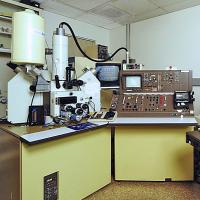
In an electron microprobe, a one-micron electron beam scans the surface of a mineral specimen to detect a specific element or to determine the elemental composition at the spot under the beam. This information cannot be obtained by x-ray diffraction or optical microscopy. The electron microprobe is an essential part of process mineralogy problem solving today; we have used it to:

Electron Microprobe

  • locate submicroscopic gold in sulfides and other minerals;
  • determine the disposition of heavy metals, such as uranium, lead, chromium, cadmium, etc., at low levels in contaminated soils or hazardous wastes;
  • analyze slags or furnace and boiler deposits to determine the cause and mechanism of detrimental scale formation;
  • locate valuable or hazardous elements occurring at low levels or as substituting ions in minerals for which they are not an essential constituent.

The following example illustrates a problem that was solved with the electron microprobe. For some copper deposits, the extraction obtained by acid leaching is frequently not as good as expected. One of the primary reasons is that copper sometimes occurs associated with iron oxides in acid-insoluble form. This association is illustrated below by means of backscattered electron and x-ray images of the elements of interest.
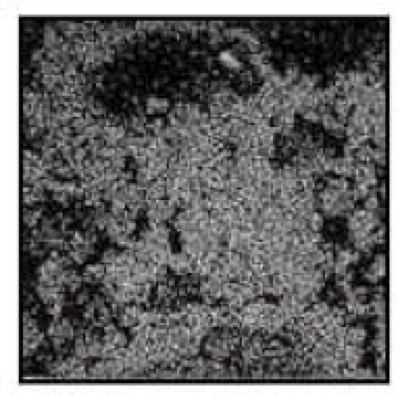
X-Ray Map Showing
Copper Distribution in the
Same Goethite Grain
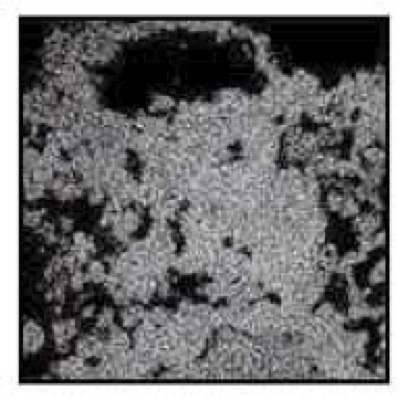
X-Ray Map Showing Variable
Concentrations of Iron in the
Same Goethite Grain
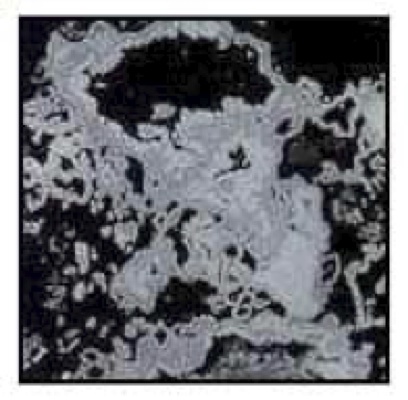
Backscattered Electron
Image Showing Heavy
Element Concentration

This image shows a goethite (FeOOH) particle in an oxide copper ore. Areas of greater brightness correspond to heavier elements; darker areas correspond to lighter elements. The structure of the grain is typical of goethite derived from the oxidation of sulfides.

The spatial correlation between copper and iron occurrence illustrates a submicroscopic, perhaps structural, association of copper with the hydrated iron oxide. This copper would not be recoverable by conventional leaching. In a standard analysis for acid-soluble copper and sulfide copper, the copper associated with hydrated iron oxides is frequently misinterpreted as sulfide copper.
<< Previous: Optical Microscopy

Next: X-Ray Diffraction Analysis >>

Client Site Login

Questions or comments about this web site? Send email to webmaster@hazenresearch.com
All other requests should be directed to info@hazenresearch.com
Copyright © 2006 Hazen Research, Inc. All rights reserved.